Aromawave Editorial • Cold Air Diffuser Guide • Australia
One of the most common questions Australians ask before buying a cold air diffuser is how much noise it makes. The answer depends on the intensity setting and where you place it. This complete guide covers what to expect at every setting, how it compares to other diffuser types, and how to manage the sound in any room.
For the complete technical guide to how cold air diffusers work, read the cold air scent diffuser 101 guide. Shop the full Aromawave range at aromawave.com.au.
What sound does a cold air diffuser make?
The sound a cold air diffuser produces comes from the internal air pump. A small compressor inside the unit generates a continuous stream of pressurised air, which is then directed through the fragrance oil reservoir to create the dry mist. The pump runs for as long as the diffuser is operating, which means the sound is constant rather than intermittent.
The character of the sound is a low, steady hum. It is not a clicking or ticking sound. It is not a water-gurgling or bubbling sound like an ultrasonic. It is not a fan noise with variable airflow. The closest everyday comparison is the background hum of a refrigerator at a short distance, or a laptop fan running at a low, steady speed. For most people, this level of background sound sits within the range of normal household ambient noise and becomes unnoticeable after a few minutes. To understand the full mechanics behind the pump mechanism, read the guide on how a cold air diffuser works.
The intensity setting has a direct effect on how much sound the diffuser produces. At low settings the pump works more gently, and the sound output drops significantly. At max settings the pump runs at full capacity and the hum is noticeably louder. The difference between low and max is substantial, which is why the setting you choose matters as much as the diffuser model itself.
Sound at each intensity setting
The Aromawave Ultra Pro and Wireless Ultra Smart each offer four intensity settings: Low, Medium, High, and Max. Here is what to expect from the sound profile at each level.
Best for: bedrooms, quiet studies, library-like spaces
Best for: living rooms, open-plan spaces, home offices
Best for: large open-plan areas, entertaining spaces
Best for: large open spaces, entry halls, commercial areas
Practical tip: For most Australian living rooms and bedrooms, low or medium is the appropriate setting for everyday use. The fragrance coverage on these settings is more than adequate for spaces up to 60m², and the sound output is minimal. Max is typically only needed in very large spaces or to fill a room quickly before an event.
Cold air diffuser vs ultrasonic diffuser: which is quieter?
An ultrasonic diffuser is quieter than a cold air diffuser. Ultrasonic devices use a small vibrating disc that operates at a frequency beyond the range of human hearing, which means the primary mechanical component produces no audible sound. The only noise an ultrasonic typically produces is a soft bubbling from the water in the reservoir, which is very faint.
Cold air diffusers use an air pump, which produces an audible hum. That hum is low and steady, but it is present in a way that ultrasonic devices generally are not. If absolute quiet is the most important factor in your decision, an ultrasonic device is the quieter option. However, the sound difference comes with a significant performance difference. For the full technology comparison, read the guide to cold air diffuser vs ultrasonic diffuser.
Cold Air Diffuser (Aromawave)
Ultrasonic Diffuser (water-based)
The tradeoff is direct: the sound difference between a cold air diffuser on low and an ultrasonic is meaningful in a completely silent room, but the fragrance performance difference is also significant. An ultrasonic diffuser covers a fraction of the area and disperses a diluted fragrance. Whether the quieter operation is worth the reduction in fragrance coverage depends entirely on what you need the device to do.
Is a cold air diffuser suitable for a bedroom?
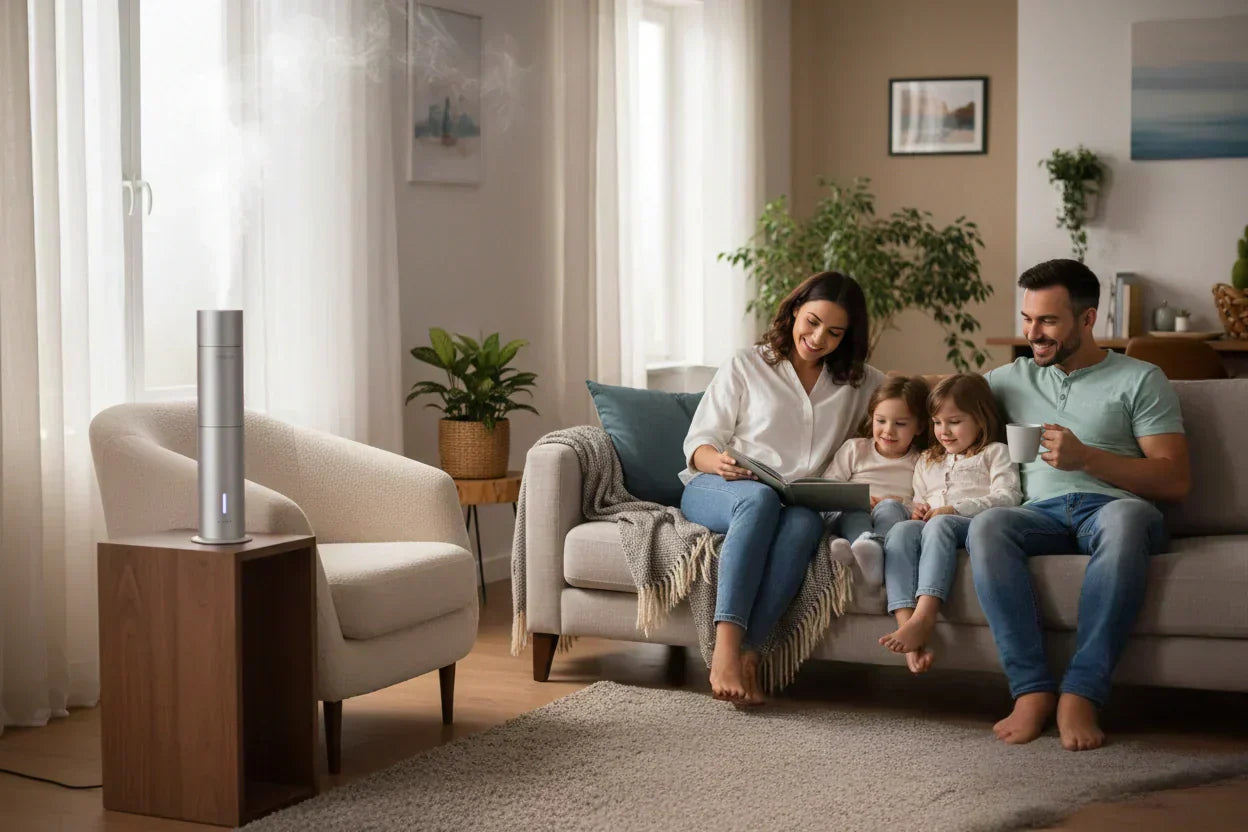
Yes. At the low setting, the sound from a cold air diffuser is within the range of everyday ambient bedroom noise for most people. Many Australian homes have background sounds in the bedroom at night: the hum of a ceiling fan, the distant sound of air conditioning, outside traffic, or a partner breathing. At the low setting, a cold air diffuser sits comfortably alongside these sounds rather than above them.
At the high or max setting in a quiet bedroom, the hum is more present. For most people, the low or medium setting is the appropriate choice for bedroom use. These settings still provide meaningful fragrance coverage for a standard Australian bedroom of 20 to 40 square metres, and the sound output at these levels is minimal.
The Bluetooth app on both the Ultra Pro Scent Diffuser and Wireless Ultra Smart Scent Diffuser includes a scheduling function. You can set the diffuser to run for a set period at a set intensity and switch off automatically, without needing to interact with the device once it is running. This is particularly useful for bedrooms where you want the fragrance to be present when you enter the room but prefer to have the diffuser off later.
Is a cold air diffuser suitable for a home office?
Yes. At the low or medium setting, the sound from a cold air diffuser is comparable to a laptop fan running at a low, steady speed. In a home office with normal background noise, such as keyboard sounds, a monitor fan, or ambient street noise, the diffuser blends into the environment without drawing attention to itself. For the complete guide to using a cold air diffuser in a working environment, read the cold air diffuser for home office guide.
One practical consideration for home office use is microphone proximity. If you are on frequent video calls, placing the diffuser directly next to your microphone on a hard surface may result in the hum being faintly picked up. Placing the diffuser at least one to two metres from your microphone, on a soft surface, resolves this in most cases.
How to place a cold air diffuser in a home office
Position the diffuser on a shelf at mid-height, at least one to two metres from your desk microphone. Use a padded mat or folded cloth under the unit to absorb surface vibration. Run on low or medium. At these settings the sound is comparable to a laptop fan and will not be picked up by most external microphones at normal distance. The Aromawave Wireless Ultra Smart Scent Diffuser is the recommended choice for home offices because it can be moved freely without a power cable.
How to reduce the sound from a cold air diffuser
The sound from a cold air diffuser is determined primarily by the intensity setting, but placement also affects how prominent the hum feels in a room. These five placement adjustments can make a noticeable difference.
Placing the diffuser on a hard glass, stone, or timber surface can amplify vibration. A folded cloth, padded mat, or soft tray underneath absorbs the vibration before it transfers to the surface.
Hollow cabinets, hollow sideboards, or thin-panel shelves can amplify the pump hum by acting as a resonance chamber. Solid timber shelving or a solid surface is a better placement choice.
A diffuser placed directly on the floor can feel louder than one positioned at shelf height. Mid-height placement also improves fragrance distribution throughout the room.
Placing the diffuser in a corner or directly against a hard wall can reflect the hum back into the room. A position slightly away from walls, facing into an open space, reduces this effect.
The best way to reduce sound is to use the lowest setting that achieves the fragrance coverage you want. For most Australian bedrooms and home offices, the low or medium setting is sufficient.
Are the Ultra Pro and Wireless Ultra Smart the same noise level?
Yes. Both the Ultra Pro Scent Diffuser ($199) and the Wireless Ultra Smart Scent Diffuser ($249) use the same cold air diffusion technology with the same internal pump mechanism. Both cover up to 100m², both offer the same four intensity settings, and both produce a similar sound profile at each setting. The only difference between the two models is the power source: the Ultra Pro runs from a wall outlet, while the Wireless Ultra Smart runs on a rechargeable battery. For a full side-by-side on the two models, read the Ultra Pro vs Wireless Ultra Smart guide.
Aromawave brings together hotel-inspired fragrance oils, advanced cold air diffuser technology and a car scenting range to give Australian homes, offices and vehicles a genuine luxury fragrance experience. All products ship via Australia Post tracked delivery to all Australian states and territories (NSW, VIC, QLD, WA, SA, TAS, ACT, and NT) with free shipping on orders over $99. 30-day returns. 12-month warranty on all diffusers. ABN 70 681 300 363. Head Office: Suite 813, 308 Wattle St, Ultimo NSW 2007.
Other questions about cold air diffuser noise in Australian homes
Beyond bedrooms and home offices, several practical noise questions come up regularly from Australian buyers. These cover apartments, pets, what happens when the oil runs low, and whether the sound changes over time.
At low or medium, the sound from a cold air diffuser does not travel through standard apartment walls. The hum is carried through surfaces rather than air, which means the main concern is vibration transfer to a hard floor or shelf. Placing the diffuser on a soft mat resolves this. At high or max in a very quiet building, some low-frequency hum may transfer through a shelf fixed to a shared wall, though this is uncommon in practice.
The low, steady hum from a cold air diffuser is consistent rather than sudden or variable. Most dogs and cats that are accustomed to regular household background sounds, including refrigerators, air conditioners, and ceiling fans, adapt to the diffuser hum within a short period. Placing the diffuser at shelf height rather than on the floor also reduces the sound level at pet height, where it matters most.
When the fragrance oil in the reservoir drops very low, the pump draws air through less oil and may produce a slightly different sound profile, sometimes a marginally higher-pitched hum. This is normal and serves as a practical cue to top up the reservoir. The sound returns to its normal character once oil is refilled to the recommended level. Checking the reservoir every few days on regular use avoids this.
A well-maintained cold air diffuser should produce a consistent sound profile over its lifespan. Keeping the oil pathway and nozzle clean is the main factor in maintaining normal pump performance. Aromawave diffusers carry a 12-month warranty from date of purchase. Any significant change in sound from a clean, correctly maintained unit is something to flag with support.
Quoting a single decibel figure for a diffuser is less useful than it appears, because the measured level changes significantly with room size, surface materials, distance from the unit, and intensity setting. The more useful benchmark is everyday context: at low, comparable to a refrigerator hum at a short distance; at medium, comparable to a laptop fan at steady low speed; at high, comparable to a quiet desk fan at low speed; at max, comparable to a moderate fan at close range.
Yes. Both the Ultra Pro Scent Diffuser and Wireless Ultra Smart Scent Diffuser include a Bluetooth app with scheduling and timer functions. You can set the diffuser to run for a defined period at a chosen intensity and switch off automatically, without needing to return to the device. This is useful for any space where you want the diffuser to run during specific hours only.


A cold air diffuser produces a low, steady hum from the internal air pump motor. At the low setting, the sound is barely audible at arm's length and blends into normal household ambient noise. At the max setting, it is noticeably louder and audible from several metres. The sound level changes significantly between settings, so the intensity you choose matters as much as the model. Both the Aromawave Ultra Pro Scent Diffuser ($199) and Wireless Ultra Smart Scent Diffuser ($249) produce a similar sound profile at each setting.
The sound is a low, continuous hum from the air pump motor. It is not a clicking or ticking sound, not a water-gurgling or bubbling sound, and not a variable fan noise. The closest everyday comparison is the background hum of a refrigerator at a short distance, or a laptop fan running at a low, steady speed. The sound is constant for as long as the diffuser is running.
Yes. Ultrasonic diffusers use a vibrating disc that operates silently, making them quieter than cold air diffusers. A cold air diffuser uses an air pump, which produces an audible hum. The tradeoff is performance: cold air diffusers cover much larger areas (up to 100m² vs typically 15 to 30m² for ultrasonic) and disperse pure undiluted fragrance oil rather than a water-diluted mist. The full comparison is covered in the cold air diffuser vs ultrasonic diffuser guide.
Yes. At the low or medium setting, the hum from a cold air diffuser is within the range of normal bedroom ambient noise for most people. Many Australian bedrooms already have background sounds: ceiling fans, air conditioning, or outside traffic. At low or medium, a cold air diffuser sits within this ambient range. The Aromawave Bluetooth app also includes a scheduling function that lets you set the diffuser to run for a set time and switch off automatically, without needing to interact with the device once it is running.
Yes, significantly. At the low setting the pump operates gently and the sound is minimal. At medium the hum is slightly more present. At high it is audible in a quiet room. At max the pump runs at full capacity and the sound is clearly audible from several metres. For bedroom and home office use, low or medium is the setting most people find appropriate. Max is typically used in large open-plan spaces that need rapid fragrance coverage.
Five adjustments make the most difference: use the lowest effective intensity setting, place a soft mat or folded cloth under the diffuser to absorb surface vibration, avoid placing it on hollow furniture which can amplify the hum, position it at mid-height on a solid shelf rather than directly on the floor, and keep it slightly away from hard walls rather than in a corner. Using the low or medium setting is the most impactful adjustment.
Yes. Both models use the same cold air diffusion technology with the same internal pump mechanism. Both produce a similar sound profile at each intensity setting. The only difference between the two models is the power source: the Ultra Pro Scent Diffuser ($199) runs from a wall outlet, and the Wireless Ultra Smart Scent Diffuser ($249) runs on a rechargeable battery. Coverage, Bluetooth app, remote control, and all four intensity settings are identical across both models.
Yes. At the low or medium setting, the sound from a cold air diffuser is comparable to a laptop fan running at a steady, low speed. In a home office with normal ambient noise, the diffuser blends in without drawing attention. For video calls, place the diffuser at least one to two metres from your microphone and on a soft surface to minimise any vibration transfer. The Wireless Ultra Smart Scent Diffuser is particularly suited to home offices because it can be positioned anywhere without a power cable.
Aromawave brings together hotel-inspired fragrance oils, advanced cold air diffuser technology and a car scenting range to give Australian homes, offices and vehicles a genuine luxury fragrance experience.
Ultra Pro Scent Diffuser $199 (was $299) • Wireless Ultra Smart Scent Diffuser $249 (was $349)
27 fragrance oils from $29.99 • Phthalate-free • IFRA compliant • Vegan • Cruelty-free
Free tracked delivery on orders over $99 • Australia Post • 30-day returns • Aromawave
Free AU shipping on orders over $99 • 30-day returns • 12-month warranty • ABN 70 681 300 363
Aromawave™ is an independent brand and is neither affiliated with, authorised by, nor endorsed by any hotel, perfume brand, fragrance house, or their respective affiliates. Any third-party brand names are referenced solely for descriptive and comparative purposes to indicate fragrance inspiration, and all trademarks remain the exclusive property of their respective owners.